Try Try hard Try harder Try Easier
The habit progression system built for the people habit trackers keep failing to help.


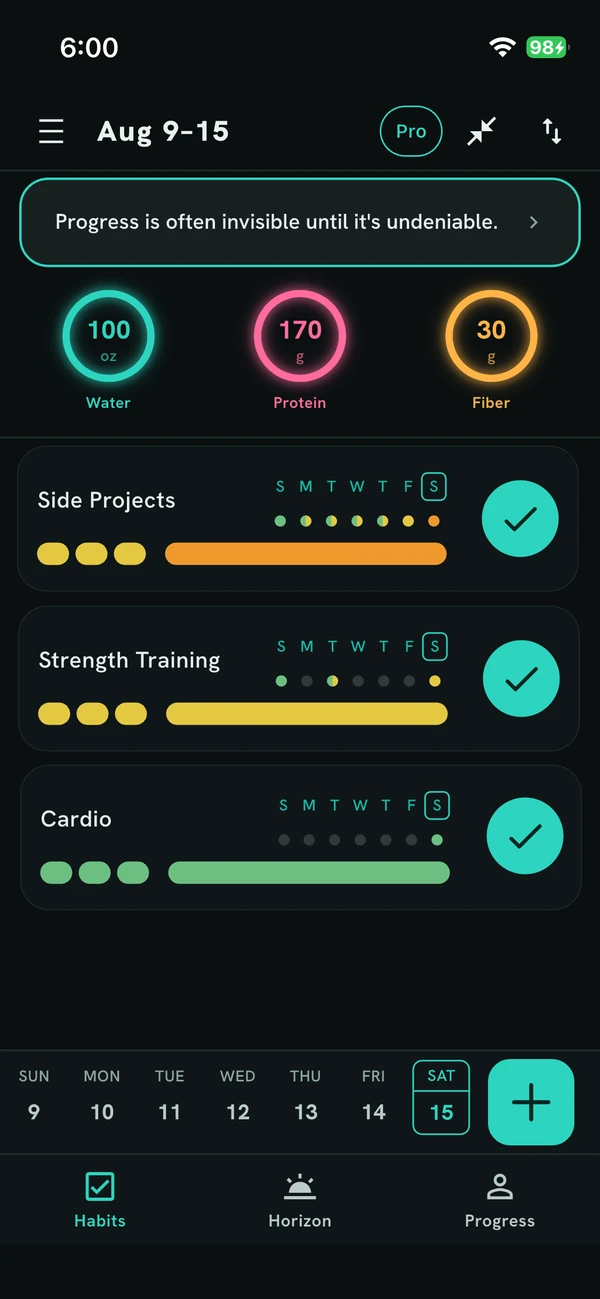
The habit progression system built for the people habit trackers keep failing to help.
Research gives us three major reasons why.
When humans plan, we routinely plan based on everything going right.
Even when we set pessimistic goals, we still underestimate how long things will take.
Why plans failWe believe that growth will be quick, easy, and dramatic. When it's slow, difficult, and hard to notice, we quit.
Why we quit earlyUnder a strict goal, one slip often leads to abandoning the pursuit.
If a broken streak ends the habit, the streak was the habit.
Why one miss ends itThe Planning Fallacy
This is why we created a 2 goal system. Every habit gets a goal of once a week (the floor), and a goal you choose (the ceiling). Everything between the two is a success.
False Hope Syndrome
Our difficulty setting recommends a starting pace that is measured and has room for growth. While our progression system makes sure growth is earned at a reasonable pace.

The "What the Hell" Effect
So what happens when you eventually miss a week? Nothing. There's no streak to break, and life happening doesn't erase what you built.
When you come back, you don't need to return at your full goal. Show up once, and ramp back up at your own pace.

Every failed habit ends with the same thought:
If I had tried harder,
it would have worked.
But the truth is:
Unrealistic demands fail everyone,
no matter how hard you try.